Every winter, the same irony plays out: the bathroom is the first room you visit each morning — barefoot, undressed — and the last room the heating ever reaches. You don't need to crank the thermostat for the whole house to fix it. You need to spend warmth where your skin actually is, and stop wasting it where it isn't.
1. Seal the drafts you can fix in ten minutes
Bathrooms lose heat through the usual suspects: exterior-wall windows, exhaust-fan dampers that stick open, and the gap under the door. A $10 roll of weatherstripping around the window and a door draft stopper make a visible difference in how long the room holds warmth after a shower. Check the exhaust fan damper too — if outside air whistles through it, a $15 replacement damper beats paying to heat the outdoors.
2. Use the shower's own heat, on purpose
Steam is free heating. Keep the bathroom door closed while showering and let the warm, humid air equalize through the room for a few minutes before running the exhaust fan. The mistake most people make is flipping the fan on instantly — drying the air they just paid to warm. Ventilate after you've enjoyed the warmth, not during.
3. Warm the floor zone, not the house
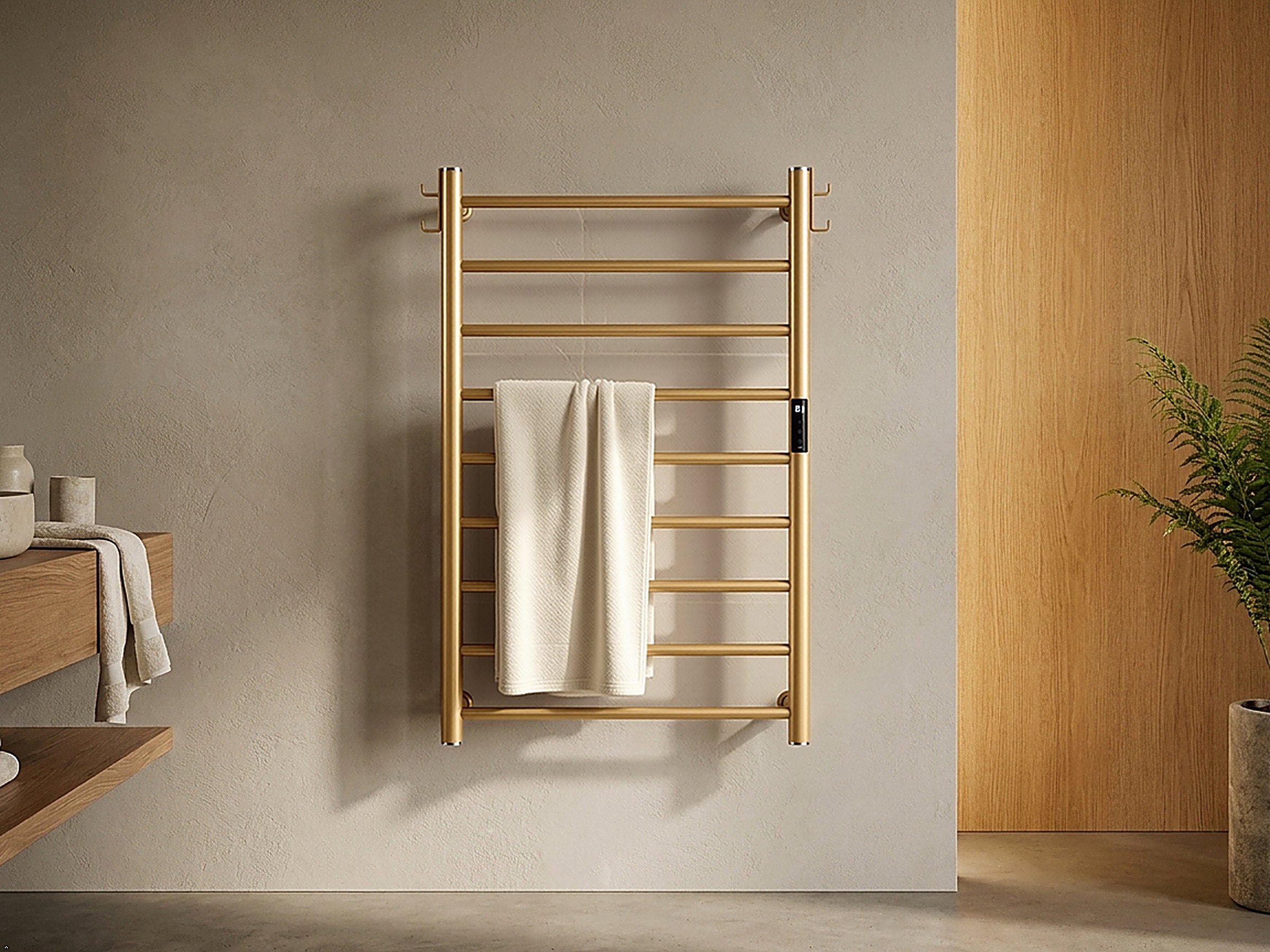
Cold bathrooms feel cold because of contact points: tile underfoot, a cold towel, a metal bar. Heated floor mats cost little and target exactly the tile you step on. And this is where a heated towel rack earns its keep: a towel warmed to ~122–140°F wraps you in immediate comfort the second the shower ends — the sensation people actually want from "a warm bathroom." It draws a fraction of what a space heater does (95–165W, think pennies a day) and, unlike a space heater, there's no tip-over risk near water.
You don't need a warmer house. You need a warm towel, warm feet, and a room that holds them.
4. Put warmth on a schedule, not a switch
The single biggest cost-saver is timing. Warming a bathroom at 6 a.m. costs the same as warming it at 3 a.m. — except one of them is useful. A rack with a built-in 1–24h timer lets you schedule heat for the two windows that matter (morning and evening showers) and forget it. Set it once in November; it handles the season.
A 165W towel rack run 3 hours a day uses about 15 kWh a month — roughly $2.50–3.00 at typical US rates. A 1,500W space heater doing "warm-up duty" for the same hours runs 9× that. Warmth where you touch it beats warmth in the air you pass through.
5. Keep towels dry, not just warm
A damp towel in a cold room feels colder the moment you touch it — evaporation pulls heat right off your skin. In winter, towels also dry slower, so they sour faster. A rack that dries towels between uses solves both ends: dry towels stay fresher, and a warm dry towel at shower's end is the cheapest luxury in the house.
The winter setup, in one list
- Weatherstrip the window and door (one-time, ~$10)
- Shower with the door closed; run the fan after, not during
- A heated towel rack on a timer for the morning window — 104°F for all-day drying, 140°F for hot towels
- A bath mat you can toss in the dryer, or a second mat in rotation
None of it requires a contractor, and the whole setup costs less per month than one evening of electric space heating. If you're picking the rack itself, check the five specs that matter — starting with 120V for US outlets.